
“The Whodunnit Dagger celebrates books where the sex, swearing, and bloodletting take place offstage–books that focus on the intellectual challenge at the heart of a good mystery, and which revolve around often quirky characters. Books in this category include cosy crime, traditional crime, and Golden Age-inspired mysteries.”
That’s the description given on the Crime Writers’ Association website for one of the two new Dagger awards presented in 2025. Readers of the blog will know that I was trying to read the shortlist before the winner was announced, a task I fell two books short of. But as the shortlist was announced, as I read the books and as the winner was announced, it raised an important question for me – what criteria were the books being judged on?
I want to make a couple of things clear before I get to my point.
First of all, I really enjoyed the book that won the Dagger, The Case Of The Singer And The Showgirl. It’s the second book in the series begun with The Mysterious Double Death Of Honey Black, both of which are fun and well worth your time.


Secondly, I do understand that any judgment on something like a book is subjective. Much as I often opine on my blog that I’m definitely right and other people are wrong, I am well aware that people’s tastes vary, even when they are looking at exactly the same thing.
Thirdly, hearing about this Dagger really excited me. Regular readers know how much I prize the Grandest Game In The World and being hoodwinked (fairly) by an author, so seeing an award that seemed to be focussing on this aspect of the genre was a real delight.
But it seems that the CWA may have had other ideas…

So the shortlist consisted of:
- A Death In Diamonds by S J Bennett
- Murder At The Christmas Emporium by Andreina Cordani
- The Case Of The Singer And The Showgirl by Lisa Hall
- A Good Place To Hide A Body by Laura Marshall
- A Matrimonial Murder by Meeti Shroff-Shah
- Murder At The Matinee by Jamie West
I’ve only read four of them, but it’s enough to highlight the differences in plot. Murder At The Christmas Emporium is a twisty-turny mystery full of misdirections and surprises, set in a Wonka-esque toyshop and is rather marvellous. The Case Of The Singer And The Showgirl is, apart from it’s time-travel setting, a pretty straightforward plot with, to me at least, an obvious murderer. A Good Place To Hide A Body, well, isn’t a whodunnit, so no idea how that made the shortlist, and Murder At The Matinee is a beautifully-clued period whodunnit that evokes the Golden Age of mystery writing. My point is, there are (at least) two titles with complex well-constructed mystery plots, and the winner of the prize that mentions in its own blurb “the intellectual problem” was the one with the most straightforward plot.
So my question is, what is the prize being awarded for? The best written novel that contains a whodunnit element or the best constructed whodunnit plot contained within a novel?
Even referring to complex plotting opens a can of worms. Take, for example, Ellery Queen’s The French Powder Mystery, which is a wonderful logic problem of a book. If you’re not interested in the mystery element, then you might want to look elsewhere as it’s a bit of a slog in places, but you can’t deny the masterful plotting. On the other hand, what about Christie’s After The Funeral? The plot isn’t that complex – if you spot one thing, it opens the whole thing wide open, but damn, it’s clever. Mystery connoisseurs could probably debate which one is the better plot (although most would agree that the Christie is the better book) but you can’t overlook that they are both brilliant whodunnits.
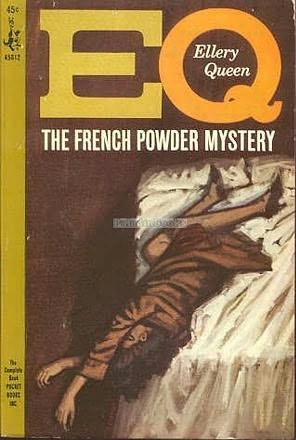

One book that is the opposite – a good book (in some people’s eyes) that contains a rubbish mystery – is Cat Of Many Tails, also by Ellery Queen. I’ll be reviewing this one in the next couple of days, so I’ll withhold my judgement as to the quality of the book for now, but lots of people really rate it. However the mystery is absolutely dreadful – anyone who can’t spot the killer 100 pages from the end needs to hand in their armchair detective card. But despite it having a whodunnit element, it is a highly acclaimed (rightly or wrongly) novel, so would that have won the Whodunnit Dagger?
That’s the question really – the Whodunnit Dagger is awarded for the best Whodunnit, but what does that mean? Is it the best novel that contains a whodunnit or is it the best whodunnit contained in a good novel? Based on this year’s winner, I’d say it would be the former – but surely the majority of the Gold Dagger nominees contain an element of whodunnit about them, so what differentiates this award in that case?
Is it for the best cosy crime novel? I hope not, because surely that’s saying that this is for books not good enough for the Golden Dagger? I really wanted this to be a Dagger for us armchair sleuths who want a plot we can sink our teeth – and brains – into, and while, as I said, a good entertaining book won, it didn’t make me puzzle over the plot.
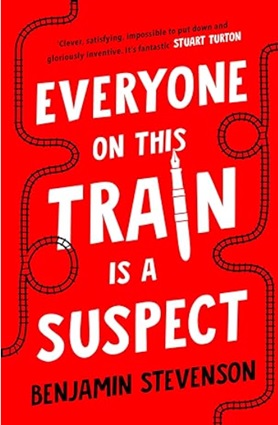
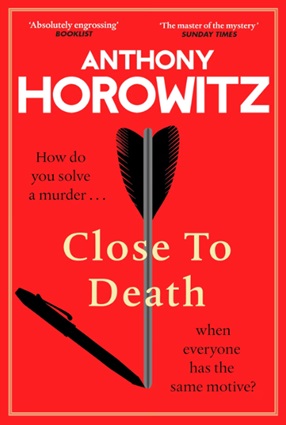
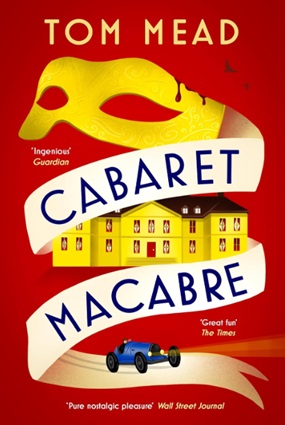
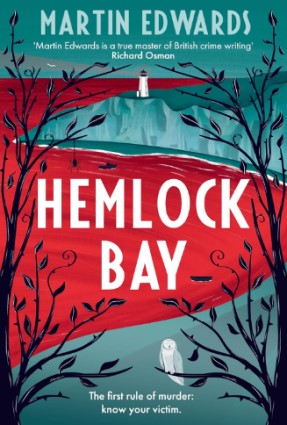
If I had the casting vote, I’d have probably have given it to Jamie West from the shortlist. But I would also have shortlisted Everyone On This Train Is A Suspect by Benjamin Stevenson and longlisted (and shortlisted) Close To Death by Anthony Horowitz, Cabaret Macabre by Tom Mead and Hemlock Bay by Martin Edwards, all excellent books and puzzles in their own right.

I know, not everyone can read every book, everyone sees something different in a book, and not everyone will agree with me as to who makes a good whodunnit, but I do hope than next time, the ingenuity of those writers out there who put the effort into playing the Grandest Game In The World with the reader is something that the judges will take into account.
 In Search of the Classic Mystery Novel