Every now and then, my Book Group decides not to read a book for the month – well, not a specific book, we read books all the time – but instead choose a “best of” category to discuss. I don’t always write them up – I’ve only written up the Top Tens from the 1930s and the 1940s – but I haven’t blogged much this month for various reasons so I thought I’d make up for it by doing this one – my favourite standalone mysteries.
And let’s emphasise that word – “favourite”. Not “best”, before the comments erupt in my choices (especially the first one). “Favourite”. And to clarify standalone, the rule was that it didn’t feature characters that, to the best of the group’s knowledge, didn’t appear in any other novel or short story. That last one nixed one of my original choices, namely Smallbone Deceased by Michael Gilbert as apparently the hero therein cropped up a couple of times in short form. But I had quite a long list of back-up titles, so not a massive problem.
So, in no particular order…
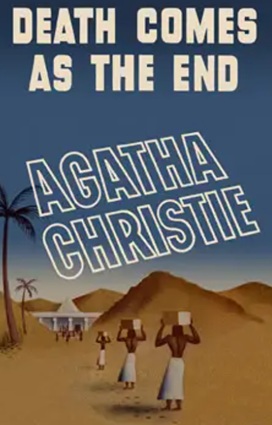
Agatha Christie… yes, I know And Then There Were None is probably a better book – better appreciated, certainly – and my blogging buddy Kate made a good case for Crooked House, but I’m going to pick Death Comes As The End. Not the first ever historical mystery written – see The Julius Caesar Mystery and The Murder Of Sir Edmund Godfrey, for example – but there is a case for it being the first classic-style murder mystery with an historical setting. (Julius Caesar is, apparently, a comedic book and Godfrey is a genuine attempt to solve an historical mystery, rather than an out-and-out novel. Loads of murders under the ancient Egyptian Sun and it’s rather overlooked in her output in my opinion. If you are guilty of passing it by for whatever reason, please do take a look.
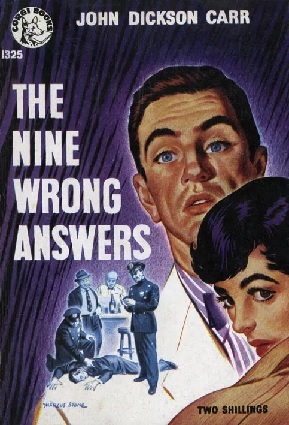
John Dickson Carr – a few choices here. The Emperor’s Snuff-Box is a popular standalone and you can (and some of my fellow bloggers did) make a good case for The Burning Court, despite, iirc, the lead character briefly appearing in Panic In Box C so technically not a standalone, but I went for The Nine Wrong Answers. It’s Carr at his most game-playing, posing questions and answers that seem valid but are in fact, well, wrong. You can argue that he cheats massively with the final answer, but this was one of the books that showed me what Carr could do. Shame he got obsessed with fairly dull historicals after that…
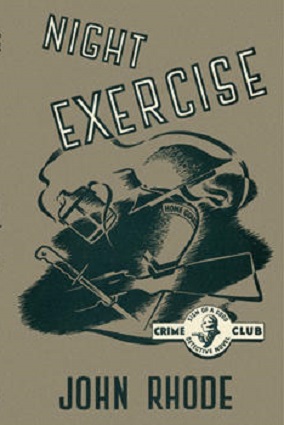
John Rhode – not many to choose from here. His early pre-Priestley stuff is, well, rubbish, at least what I’ve read of it, but his sole non-series book thereafter, Night Exercise aka Dead Of The Night is interesting. Rhode’s ability to bring the past (or the present as it was to him) to life is always overlooked in my book. It’s not in every book, but this tale of the Home Guard – the real Home Guard, don’t panic – is interesting as much for the setting and tales of life on the home front as it is for the mystery. More so, to be honest. But the second thing that makes this stand out is the ending. I won’t spoil it, but I guess it’s something Rhode thought would happen…
At this point, I should write about The Norwich Victims by Francis Beeding, as it’s an excellent inverted mystery – not my thing, usually, but this is really good – but in writing this, I discover that Inspector bloody Martin also shows up in, amongst other books, No Fury. You’d think someone in my brain trust would have pointed this out – checks who else has read No Fury – oh, it’s just me. Damn. So better pick something else then…
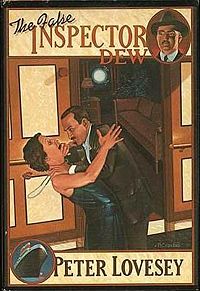
I’m going to go with Peter Lovesey’s The False Inspector Dew, the story of a would-be murderer who, on a transatlantic voyage, adopts the name of Walter Dew, the man who caught Crippen. But when an body is spotted falling over the side of the ship, he finds himself tasked with finding a killer while trying to commit his own murder. I enjoyed this when I read it, but probably didn’t get it – I read it in the early days of the blog and was expecting something along the lines of Bloodhounds. But now I’ve a wider palate of tastes of crime fiction, and I’ve been meaning to come back to it – especially as I have a nice signed first edition now (complete with cat claw marks on the spine from a spot of feline mountaineering that missed every other non-valuable book…)
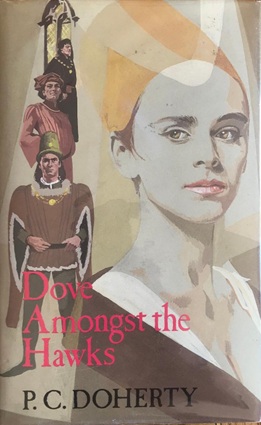
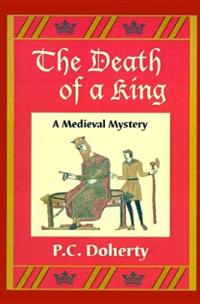
OK, last one, and it’s time for the author who has made up about 1/15 of my reviews – seriously, he’s written a lot of books and I’ve re-read quite a few – and that’s Paul Doherty. He hasn’t written that many standalones and they fall into a few categories. Some mesh in supernatural themes, such as The Haunting or The Plague Lord, books that are fundamentally investigations into historical mysteries, such as The Death Of A King and The Death Of The Red King, and some that lean into more outlandish theories but are basically mysteries with a character investigating current murders alongside an historical one. This last set are my favourites and I could have picked The Fate Of Princes (Princes in the tower), The Masked Man (the Man in the Iron Mask) but I’m going to pick the excellent Dove Amongst The Hawks, dealing with the murder (?) of Henry VI in the tower. It’s on the list to re-read, especially as it’s an area of history that I still know very little about. You’d think they’d cover the Wars Of The Roses in school, wouldn’t you?
There you have it, my five favourite standalone mysteries. But what about you, dear reader?